
Look, I’ve been there.
You spend months grinding, writing code, and testing your SQL queries. You finally build a high-ticket asset that is worth hundreds of dollars. You put it up on a popular platform, wait for the sales to roll in, and then—the realization hits. You make a $100 sale, but you only see $85 in your dashboard. Honestly, it feels like a punch in the gut. Finding the cheapest platform to sell digital products isn’t just a choice; it’s a survival tactic. If you are out here searching for the cheapest platform to sell digital products, you are already ahead of the curve. Most people are too lazy to do the math. They just follow the crowd to Gumroad or Etsy. But you? You know that finding the cheapest platform to sell digital products is the only way to hit that $2,000 monthly target on danijacob.com.
If you don’t choose the cheapest platform to sell digital products right now, you are essentially paying a “laziness tax.” In 2026, every percentage point matters. When you scale, that 10% fee becomes $200, then $500, then $1,000. That is money that belongs in your pocket, not in the pockets of some tech billionaire in Silicon Valley. This is Part 339, and we are going deeper than anyone else on the internet into the world of fee-free selling.
The Strategy: Why You Must Own Your Infrastructure
Look, when most beginners search for the cheapest platform to sell digital products, they look at the monthly subscription fee. That is a massive mistake. A platform that costs $20 a month but takes 0% transaction fee is almost always cheaper than a “free” platform that takes 10%.
The search intent for the cheapest platform to sell digital products is about long-term sustainability. On danijacob.com, we aren’t looking for quick wins. We are looking for a business that scales. If you are selling a $300 database migration script, a 10% fee takes $30. If you sell 10 of those, you just lost $300. That’s more than the cost of a high-end VPS for an entire year. Choosing the cheapest platform to sell digital products is about reclaiming your power as a creator.
The Absolute King: Self-Hosted WooCommerce
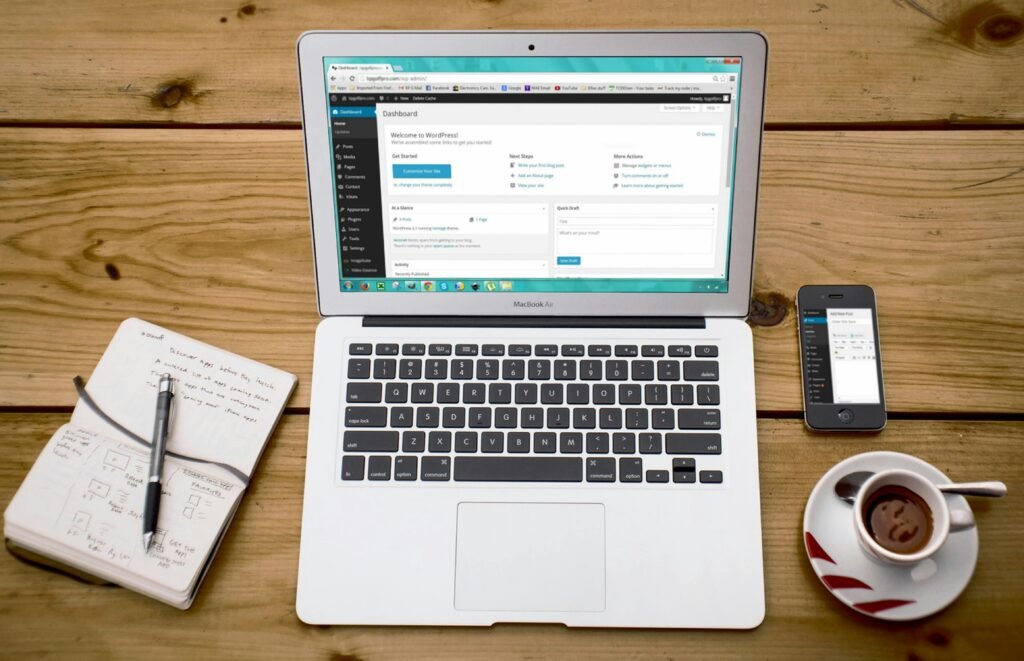
Honestly, nothing—and I mean nothing—will ever be the cheapest platform to sell digital products quite like a self-hosted WordPress site.
When you use WooCommerce or Easy Digital Downloads (EDD), you are the boss. You aren’t paying a “platform fee” because you are the platform. You pay for your hosting (which you probably already have for your blog), and that’s it.
The only fees you pay are the payment gateway fees. Stripe or PayPal will take their standard 2.9% + $0.30. That is the baseline cost of doing business online in 2026. If you want to find the cheapest platform to sell digital products, you start here. You build your own store on your own domain. You don’t build your house on rented land.
The Payhip Model: The Middle Ground
If you aren’t ready to manage your own server, Payhip is often cited as the next cheapest platform to sell digital products.
They have a “Free Forever” plan, but it comes with a 5% transaction fee. This is great for your first $100. But the moment you start making real money, you switch to their paid plans. Why? Because their highest plan removes the transaction fee entirely. This is a smart move for someone who wants a professional storefront without the technical headache of maintaining WordPress plugins.
The Lemon Squeezy Trap: Convenience vs. Cost
A lot of people will tell you that Lemon Squeezy is the cheapest platform to sell digital products because they handle taxes.
Look, here is the deal: They take 5% + 50 cents. On a $10 item, that is a 10% total fee. Is it convenient? Yes. Is it the cheapest? No. On danijacob.com, we only use tools like this if we are doing massive international volume where VAT compliance becomes a full-time job. Otherwise, we stick to the leaner, cheaper options.
The Execution: How to Kill the “Hidden” Fees
Look, even if you pick the cheapest platform to sell digital products, there are hidden monsters waiting to eat your profit.
1. The Currency Conversion Monster

If you sell in USD but your bank is in PKR, you are going to lose money on the exchange rate. Most “cheap” platforms have a terrible internal exchange rate.
- The Solution: Use Stripe and link it to a Payoneer USD account. This way, you control when and how the money is converted.
2. The Payout Fee Monster
Some platforms look like the cheapest platform to sell digital products until you try to withdraw your money. They might charge a $20 “payout fee” or a $1 per transaction fee just to send your money to you. Always read the fine print in the “Merchant Agreement.”
The Reality Check: The Hard Part of Going Cheap

I’m going to be 100% honest with you.
The hard part about using the cheapest platform to sell digital products is the marketing. Platforms like Etsy or Amazon take a huge fee because they bring you the buyers. When you use the cheapest platform to sell digital products (your own site), you have to bring the buyers yourself.
I’ve been there, sitting with a beautiful, 0% fee store that nobody visited. It’s lonely. You have to be an expert at SEO, social media, and email marketing. But here is the deal: Once you build that audience, you keep every single cent. You aren’t paying a platform to “borrow” their audience anymore. You own the audience. That is the ultimate goal.
Common Mistakes: Don’t Lose Your Profit Here
- Not Testing the Checkout: I’ve seen people set up the cheapest platform to sell digital products only to find out the checkout button doesn’t work on mobile. Test it ten times.
- Ignoring Security: If you self-host, you are responsible for PCI compliance. Use a secure gateway like Stripe so you don’t have to handle sensitive credit card data on your own server.
- Bad Refund Policy: If you don’t have a clear refund policy on danijacob.com, people will file chargebacks. Chargebacks cost you $15 to $20 each. That wipes out your “cheap” platform savings in one go.
Scaling to $2,000/Month: The Mathematical Proof

Let’s look at the numbers for a serious creator selling a $250 Technical Audit Kit.
- Marketplace (15% fee): 8 sales = $2,000. Fee = $300. You get $1,700.
- Self-Hosted (3% fee): 8 sales = $2,000. Fee = $60. You get $1,940.
- The Result: You just saved $240. That is a new laptop, a better camera, or your entire marketing budget for the next month. This is why we hunt for the cheapest platform to sell digital products.
FAQ
Is Etsy a cheap platform?
No. Between listing fees, transaction fees, and forced offsite ad fees, Etsy is one of the most expensive places to sell. It is definitely not the cheapest platform to sell digital products for technical creators.
How do I handle refunds on a self-hosted store?
You handle them through your Stripe or PayPal dashboard. You should always have a “No Refund” policy for digital downloads unless the file is proven to be defective. This protects your margins.
Do these platforms support Payoneer?
Yes. Almost every platform that supports Stripe will work with Payoneer. This is the best way to get your money into a local bank account with the lowest possible conversion fees.
What is the best platform for selling Python scripts?
If you are just starting, Payhip is great. If you want to scale, WordPress with the Easy Digital Downloads plugin is the cheapest platform to sell digital products for code.
Does the platform affect my SEO?
Absolutely. If you host on your own domain, every sale and every visit builds your domain authority. If you host on a marketplace, you are building their authority, not yours. This is a massive long-term loss.
What is the most a platform has ever taken from your sales in a single month? Let’s talk about those lost profits in the comments!
Meta Description
Don’t let transaction fees destroy your profit. Discover the absolute cheapest platform to sell digital products in 2026. Part 339 of the danijacob.com roadmap.